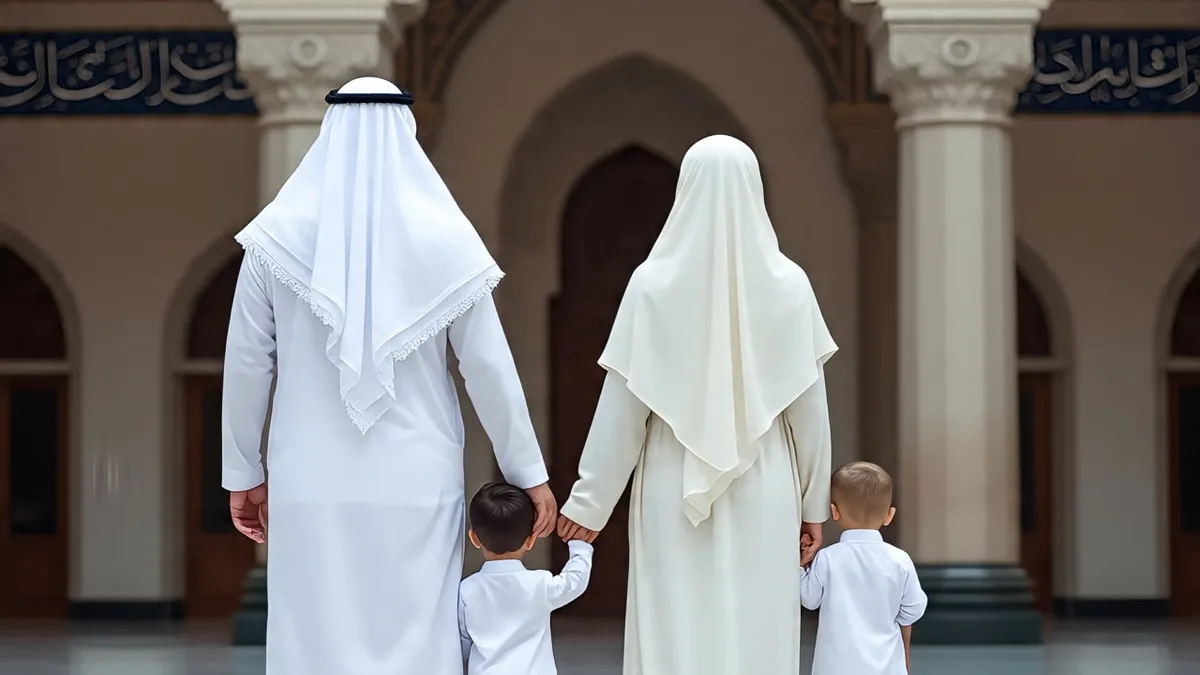
Islamic family law in Gorontalo should not merely be understood as a set of normative rules governing marriage, divorce, and inheritance, but also as an instrument to realize the objectives of Islamic law (maqashid sharia).
In the context of Gorontalo society, which upholds the philosophy “custom is based on sharia, and sharia is based on the Qur’an,” family law carries spiritual, social, and cultural dimensions that are deeply interconnected.
Therefore, analyzing the practice of family law in this region becomes more meaningful when framed within the maqashid sharia perspective, which emphasizes public welfare (maslahah).
First, in terms of hifz al-din (protection of religion), Islamic family law functions to preserve religious values within the family institution.
Marriage is not merely viewed as a social contract but also as an act of worship with moral consequences.
In Gorontalo, this religious dimension remains strong, as reflected in marriage traditions rich in Islamic symbolism.
However, challenges arise when unregistered marriages (nikah siri) occur, potentially undermining the legal function of ensuring religious and social order.
Second, hifz al-nafs (protection of life) is crucial in addressing issues such as divorce and domestic violence.
The increasing rate of divorce in Gorontalo reflects tensions within family relationships that impact the psychological and physical well-being of family members, especially women and children.
From a maqashid perspective, the law must serve to protect individuals from harm.
Therefore, strengthening mediation mechanisms, legal protection for victims, and family education programs are strategic steps aligned with the objectives of sharia.
Third, hifz al-‘aql (protection of intellect) relates closely to the issue of early marriage, which still occurs in some communities.
Marriages conducted at an immature psychological and intellectual stage can hinder individual development, particularly for women.
Within the maqashid framework, protecting intellect requires policies that promote education and mental readiness before entering married life.
Excessively lenient marriage dispensations may contradict this objective.
Fourth, hifz al-nasl (protection of lineage) lies at the core of Islamic family law.
The family institution is expected to nurture a generation that is morally and intellectually sound.
However, unjust polygamous practices and uncontrolled divorce can disrupt family stability and negatively affect children’s development.
In this regard, maqashid sharia demands that all legal policies and practices prioritize the best interests of the child.
Fifth, hifz al-mal (protection of property) is also an essential dimension, particularly in matters of financial support, division of marital assets, and inheritance.
In Gorontalo, cases still exist where women’s economic rights are not adequately fulfilled, both during marriage and after divorce.
Meanwhile, maqashid sharia emphasizes fair distribution of wealth to ensure family welfare.
Strengthening legal literacy and access to justice is key to achieving this goal.
Through the maqashid sharia perspective, it becomes clear that Islamic family law must go beyond formal legalism and strive to deliver substantive justice.
Every legal decision, policy, and social practice should be measured by the extent to which it promotes public welfare and prevents harm (mafsadah).
In the context of Gorontalo, the integration of customary values, state law, and maqashid sharia principles presents both opportunities and challenges.
Active involvement from various stakeholders—government institutions, religious courts, community leaders, and society at large—is necessary to ensure that family law serves as a tool for protection and empowerment rather than merely a form of formal legitimacy.
Ultimately, the maqashid sharia approach offers a progressive direction for the reform of Islamic family law in Gorontalo.
By placing public welfare at its core, family law can evolve into a more responsive, just, and relevant system that meets the needs of modern society while remaining rooted in Islamic values.
Writer: Ravil.N Hasan
Student of the Islamic Family Law Study Program, IAIN Sultan Amai Gorontalo
Supervisor:
1. Muhammad Syakir Al Kautsar, M.H.
2. Nurul Mahmudah, M.H.
Lecturers at the State Islamic Institute (IAIN) Sultan Amai Gorontalo
Editor: Siti Sajidah El-Zahra
Bahasa: Rahmat Al Kafi